
The OT People
THERE'S SO MANY KEY PEOPLE IN THE LINEAGE OF JESUS
Disclaimer: By no means exhaustive descriptions. Scripture doesn't tell us every detail about their appearance, personalities, or daily lives.
We did take some creative liberty with the profile pics! P.S. OT = Old Testament.
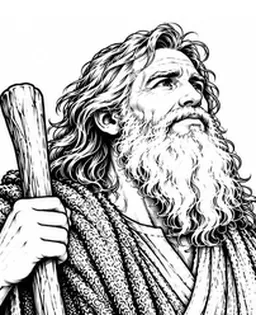
Noah
THE MAN WHO BUILT AN ARK BEFORE THE RAIN CAME!
Name meaning: Rest or comfort.
Occupation: Builder of the ark; later a farmer who planted a vineyard.
Family: Son of Lamech; husband (name not recorded); father of Shem, Ham, and Japheth.
Known for: Building the ark according to God's instructions and preserving humanity and representatives of the animal world through the Flood.
Before he was famous: Noah lived in a world that had become extremely corrupt and violent. Yet the Bible says Noah found grace in the eyes of the Lord and walked with God.
His finest hour: Noah obeyed God's instructions and built an enormous ark, even though the Bible gives no indication that he had ever undertaken anything like it before.
Not his finest hour: After the Flood, Noah planted a vineyard, drank too much wine, and became drunk.
Did you know? Noah was 500 years old when the Bible first mentions his sons and 600 when the Flood began!
Another interesting fact: God gave Noah detailed instructions for the ark, including its dimensions, materials, and construction. Noah didn't have to invent the plan; he had to follow it.
One learning point: Obedience to God matters, even when the world around us is heading in a completely different direction. Noah's life also shows the importance of following God's instructions rather than relying on our own understanding.
First meet him: Genesis 5:28–29.
Key Scriptures: Genesis 6:5–22; Genesis 7:1–24; Genesis 8:1–22; Genesis 9:1–17; Hebrews 11:7; 2 Peter 2:5.
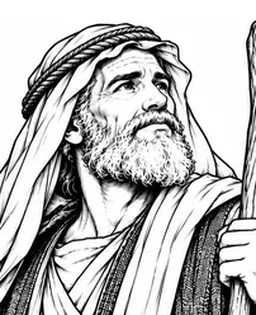
Abraham
THE MAN WHO LEFT HOME WITHOUT KNOWING WHERE HE WAS GOING!
Also known as: Abram, before God changed his name.
Name meaning: Abraham means father of a multitude, or father of many nations.
Occupation: A wealthy herdsman and head of a large household.
Family: Husband of Sarah; father of Ishmael and Isaac, and later six sons by Keturah.
Known for: Believing God's promises, leaving his homeland, and becoming the father of many nations.
Before he was famous: Abraham originally lived in Ur of the Chaldees. His father was Terah, and his family later settled in Haran. God called Abraham to leave his country and go to a land He would show him.
His finest hour: Abraham believed God's promise that he would have descendants, even when he and Sarah were well beyond the usual age for having children. His faith was counted to him for righteousness.
Not his finest hour: Abraham twice represented Sarah as his sister without making clear that she was his wife, putting her in difficult situations.
Did you know? Abraham was 75 years old when he left Haran and 100 when Isaac was born. Sarah was 90!
Another interesting fact: Abraham was called the friend of God. Imagine having that written about your life!
One learning point: Faith doesn't require knowing every detail of the future. Abraham learned to trust what God had said, even when circumstances appeared to contradict the promise.
First meet him: Genesis 11:26–32 (as Abram).
Key Scriptures: Genesis 12:1–9; Genesis 15:1–6; Genesis 17:1–8; Genesis 21:1–7; Genesis 22:1–19; Romans 4:16–22; Hebrews 11:8–19; James 2:23.
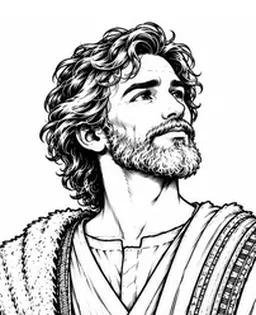
Isaac
THE MIRACLE BABY WHO BECAME A MAN OF GREAT PROSPERITY
Name meaning: He laughs or laughter.
Occupation: Herdsman and farmer.
Family: Son of Abraham and Sarah; husband of Rebekah; father of Esau and Jacob.
Known for: Being the promised son of Abraham and Sarah, and inheriting God's covenant promises.
Before he was famous: Isaac was born when his father was 100 and his mother was 90. His birth was the fulfilment of a promise God had made years earlier.
His finest hour: During a famine, Isaac obeyed God's instruction to remain in the land rather than travel to Egypt. He sowed crops and received a hundredfold harvest that year, and the Lord blessed him.
Not his finest hour: Like his father Abraham, Isaac was afraid that men might kill him because of his beautiful wife, so he told people Rebekah was his sister.
Did you know? Isaac was 40 when he married Rebekah and 60 when their twin sons, Esau and Jacob, were born.
Another interesting fact: Isaac reopened wells that Abraham's servants had dug, which had subsequently been stopped up by the Philistines. He also dug new wells and faced disputes over the water.
One learning point: God's blessing isn't limited by difficult economic conditions. Isaac's life also teaches us about obedience, patience, and making room for peace rather than constantly fighting over what others have taken.
First meet him: Genesis 17:19 (God announces his name before his birth); Genesis 21:1–7 (his birth).
Key Scriptures: Genesis 22:1–19; Genesis 24:1–67; Genesis 25:19–26; Genesis 26:1–33; Hebrews 11:17–20.
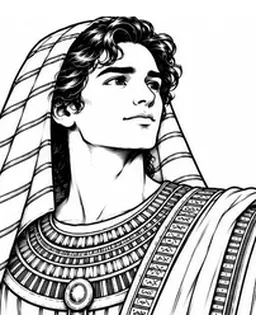
Joseph
FROM THE PIT TO THE PALACE WHAT A JOURNEY!
Name meaning: May He add or increase.
Occupation: Shepherd in his youth; servant, prison administrator, and eventually ruler over Egypt under Pharaoh.
Family: Son of Jacob and Rachel; brother of Benjamin and ten older half-brothers, with other siblings; husband of Asenath; father of Manasseh and Ephraim.
Known for: His dreams, his coat, being sold into slavery by his brothers, and eventually becoming second in command over Egypt.
Before he was famous: Joseph was his father's favourite son, and Jacob gave him a special robe. His brothers were already jealous of him, and Joseph's dreams about his future position certainly didn't help matters!
His finest hour: Joseph resisted Potiphar's wife, maintained his integrity through imprisonment, and eventually forgave the brothers who had sold him into slavery.
Not his finest hour: The Bible records Joseph sharing dreams that increased his brothers resentment. However, Scripture doesn't explicitly say he was wrong to share those dreams.
Did you know? Joseph, it is estimated, was 17 when he was sold into slavery and 30 when he entered Pharaoh's service as ruler over Egypt.
Another interesting fact: Joseph had two sons, Manasseh and Ephraim. Their names reflected what God had done in his life: helping him move beyond his suffering and making him fruitful in the land of his affliction.
One learning point: God's purposes can continue working even through betrayal, injustice, and circumstances we didn't choose. Joseph refused to let his past determine his future.
First meet him: Genesis 30:22–24 (his birth).
Key Scriptures: Genesis 37:1–36; Genesis 39:1–23; Genesis 41:1–57; Genesis 45:1–15; Genesis 50:15–21; Hebrews 11:22.
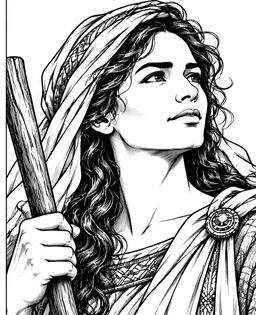
Deborah
THE PROPHETESS WHO LED A NATION — AND WASN'T AFRAID OF A BATTLE!
Name meaning: Bee.
Occupation: Prophetess and judge of Israel.
Family: Wife of Lappidoth.
Known for: Leading Israel, delivering God's instructions to Barak, and helping bring about victory over the Canaanite army.
Before she was famous: Deborah was already recognised as a prophetess and judge in Israel. People came to her for judgement while she sat beneath a palm tree between Ramah and Bethel.
Her finest hour: When God instructed Barak to lead an army against Sisera, Deborah delivered the message. Barak insisted he wouldn't go unless Deborah accompanied him. She agreed and went with him!
Did you know? Deborah is the only woman explicitly identified as a judge in the book of Judges. She also helped lead Israel during a time of oppression.
Another interesting fact: After the victory, Deborah and Barak sang a song recorded in Judges 5. Deborah described herself as a mother in Israel.
One learning point: God works through women as well as men, and He equips people to fulfil their assignments. Deborah's story demonstrates courage, spiritual leadership, and the importance of responding to God's instructions.
First meet her: Judges 4:4–5.
Key Scriptures: Judges 4:1–24; Judges 5:1–31; Hebrews 11:32 (mentions Barak).
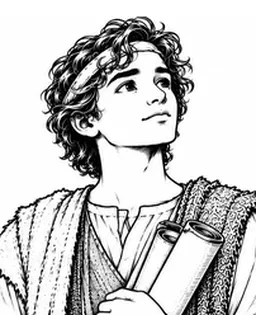
Samuel, The Prophet
THE LITTLE BOY WHO HEARD GOD CALL HIS NAME!
Name meaning: Traditionally associated with heard by God or asked of God.
Occupation: Prophet, judge, and spiritual leader of Israel.
Family: Son of Elkanah and Hannah; later father of Joel and Abijah.
Known for: Hearing God's voice as a child, leading Israel, and anointing Saul and David as kings.
Before he was famous: Samuel's mother, Hannah, had been unable to have children. She prayed earnestly for a son and promised to dedicate him to the Lord. When Samuel was born, she kept her promise and brought him to serve at the house of the Lord under Eli.
His finest hour: As a young boy, Samuel responded to God's voice with the words, "Speak; for thy servant heareth." He grew to become a trusted prophet whose words the Lord established.
A difficult family moment: When Samuel grew old, he appointed his sons as judges, but they did not walk in his ways. They pursued dishonest gain and perverted justice.
Did you know? Samuel initially thought Eli was calling him when he heard his name in the night. It happened three times before Eli realised the Lord was speaking to the boy.
Another interesting fact: Samuel anointed both Israel's first king, Saul, and the young shepherd David, who would eventually replace him.
One learning point: You don't have to be an adult before God can work through your life. Samuel also demonstrates the importance of learning to recognise and respond to God's voice.
First meet him: 1 Samuel 1:19–20 (his birth).
Key Scriptures: 1 Samuel 1:1–28; 1 Samuel 3:1–21; 1 Samuel 7:3–17; 1 Samuel 8:1–5; 1 Samuel 10:1; 1 Samuel 16:1–13.
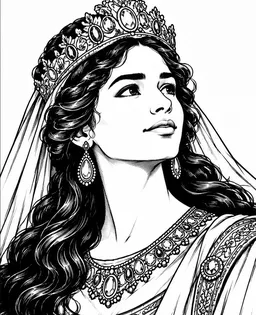
Esther, The Queen of Persia
THE ORPHAN GIRL WHO BECAME QUEEN — AND SAVED HER PEOPLE!
Also known as: Hadassah, her Hebrew name.
Name meaning: Hadassah means myrtle. Esther is commonly associated with the Persian word for star, although its exact origin is debated.
Position: Queen of Persia.
Family: Daughter of Abihail; cousin of Mordecai, who raised her after her parents died.
Known for: Becoming queen of Persia, courageously approaching the king without being summoned, and helping save the Jewish people from destruction.
Before she was famous: Esther was a young Jewish orphan living in the Persian Empire. Her cousin Mordecai had taken her in and raised her as his own daughter. When King Ahasuerus (Xerxes) sought a new queen, Esther was among the young women brought to the palace. She found favour and was eventually chosen to become queen.
Her finest hour: When Haman plotted to destroy the Jewish people, Esther faced an enormous decision. Approaching the king without being summoned could cost her life. After calling for a three-day fast, she courageously went before the king, declaring, "If I perish, I perish."
Did you know? Esther's Jewish identity was kept secret when she first entered the palace. Mordecai had instructed her not to reveal her background.
Another interesting fact: The book of Esther never directly mentions God by name! Yet throughout the story, we see remarkable timing, unexpected reversals, and events that point to His providential care.
One more interesting fact: Esther invited the king and Haman to two banquets rather than immediately revealing her request. At the second banquet, she exposed Haman's plot against her people.
One learning point: Courage doesn't mean the absence of fear. Esther recognised the danger but chose to act. Her story reminds us that God can position people strategically, even in unexpected places, and that there are moments when we must be willing to stand up for what is right.
First meet her: Esther 2:5–7 (introduced as Hadassah, also called Esther).
Key Scriptures: Esther 2:5–18; Esther 3:8–15; Esther 4:1–17; Esther 5:1–8; Esther 7:1–10; Esther 8:1–17; Esther 9:20–32.
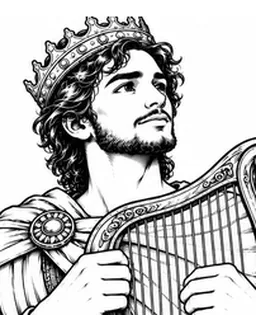
David, The King
THE SHEPHERD BOY WHO BECAME KING — AND FACED A GIANT ALONG THE WAY!
Name meaning: Beloved.
Occupation: Shepherd, musician, warrior, and king of Israel.
Family: Son of Jesse; youngest of eight sons according to 1 Samuel 16–17; father of several children, including Solomon and Absalom.
Known for: Defeating Goliath, becoming king of Israel, his worship and psalms, and being described as a man after God's own heart.
Before he was famous: David spent his early years caring for his father's sheep. While his older brothers were more visible, David was out in the fields, learning to trust God and protect the flock.
His finest hour: David faced Goliath with a sling and five smooth stones, declaring that the battle belonged to the Lord. He understood that victory wasn't dependent on his size or military experience.
Not his finest hour: David committed adultery with Bathsheba and arranged for her husband, Uriah, to be killed. His actions brought devastating consequences to his family and kingdom.
Did you know? David was anointed to be king long before he actually sat on the throne. He spent years facing opposition, danger, and uncertainty while waiting for God's promise to be fulfilled.
Another interesting fact: David was a skilled musician. Before becoming king, he played the harp for Saul when Saul was troubled.
One learning point: David's life teaches us about courage, faith, worship, repentance, and the importance of maintaining a heart that responds to God. His failures also remind us that even great leaders must remain accountable for their choices.
First meet him: 1 Samuel 16:11–13.
Key Scriptures: 1 Samuel 16:1–23; 1 Samuel 17:1–58; 2 Samuel 5:1–5; 2 Samuel 11:1–27; 2 Samuel 12:1–14; Psalm 51; Acts 13:22.
Living Rivers Resources Hub
Equipping born-again believers to live boldly by the truth of God’s Word.
Grow in faith. Walk in truth. Live the life God has called you to live.
© 2026 Living Rivers USA All rights reserved.